Best HP Content Creation Desktops Premium in 2026

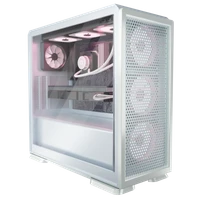



HP OMEN GT22-3090 Black 2025

Great Alternatives
These options also score highly and may better suit your specific needs
HP OMEN MAX GT23-0990m Shadow black 2026
Why we recommend this ▼
Equipped with an AMD Ryzen 9 9900X3D and an RTX 5090 with 32GB VRAM, this micro-tower delivers top-tier rendering and AI performance backed by a 1200W PSU. Its patented Cryo Chamber cooling keeps the CPU up to 7.5% cooler under load, while 64GB of DDR5 memory and dual 2TB NVMe SSDs handle massive project files without bottlenecks. This system is best for AI researchers running large language models locally and 3D artists working with complex, GPU-intensive scenes.

HP OMEN 45L A4ND8AV_1 Black 2026
Why we recommend this ▼
Equipped with a 24-core Intel Core Ultra 9 285K and an RTX 5090 with 32GB GDDR7 VRAM, this tower delivers top-tier computational and graphics throughput for demanding workloads. The 128GB of DDR5 RAM and a 360mm AIO cooler ensure sustained performance under heavy multitasking and rendering, while the 1200W PSU provides stable power delivery. This configuration is best for AI researchers running large language models locally and enthusiasts seeking uncompromised 4K gaming.

HP Omen MAX 45L TPC-W064-MT Black 2024
Why we recommend this ▼
A Ryzen 9 9900X3D chip and RTX 5090 GPU with 32GB GDDR7 drive peak gaming frame rates, while the Cryo Chamber cooling keeps the CPU up to 7.5°C cooler under load. 64GB DDR5 RAM and a 2TB SSD provide generous multitasking headroom, and the LCD liquid cooler plus RGB lighting give it a refined, customizable look. It’s best for 4K gamers seeking max settings and for 3D artists and video editors pushing Blender or Adobe Creative Cloud to the limit.

HP Z8 Fury G5 Tower
Why we recommend this ▼
The 20-core Intel Xeon w5-3535X and NVIDIA RTX 2000 Ada with 16GB VRAM provide certified, stable performance for real-time ray tracing and complex simulations. Its tool-less chassis offers vast expansion headroom, supporting up to 2TB of ECC DDR5 RAM across sixteen DIMM slots for evolving project demands. This tower is best for engineers and data scientists running multi-threaded simulations or rendering tasks where data integrity and uptime are critical.

HP Z6 G5
Why we recommend this ▼
The 20-core Intel Xeon w5-3525 and NVIDIA RTX 2000 Ada with 16GB VRAM deliver certified reliability for complex simulations and rendering, backed by 64GB of ECC DDR5 memory. Its tool-less chassis supports up to three high-power GPUs, offering exceptional expansion headroom beyond the current configuration. This tower is best for engineers and data scientists running multi-threaded simulations or machine learning models that demand data integrity and sustained compute throughput.

HP Z2 Mini G1a Jet Black 2025
Why we recommend this ▼
The unified 128GB memory pool and 16-core AMD Ryzen AI Max+ PRO 395 chip let this compact 2.3kg workstation run large language models locally without a discrete GPU. Its dense I/O includes dual Mini DisplayPort 2.1 and Wi-Fi 7, making it a connectivity powerhouse in a space-saving chassis. This system is best for AI developers and data scientists who need to prototype 70-billion-parameter models on their desk without relying on cloud instances.

HP Z6 G5 A Tower
Why we recommend this ▼
The 16-core AMD Ryzen Threadripper PRO 9955WX and NVIDIA RTX 2000 Ada with 16GB VRAM deliver strong multi-threaded performance for demanding rendering and simulation tasks. Its mid-tower chassis supports up to 96 cores and multiple GPUs, offering significant expansion headroom beyond the 32GB of ECC DDR5 RAM included here. This workstation is best for engineers and 3D artists who need a reliable, expandable platform for complex, long-running compute workloads.

HP Z2 G1i
Why we recommend this ▼
The Intel Core Ultra 7 265K 20-core processor and Nvidia RTX 4000 Ada with 20GB VRAM provide substantial power for complex modeling and rendering tasks. Its tool-less mid-tower chassis offers easy upgradability, supporting up to 256GB of DDR5 memory and featuring extensive connectivity with nine USB-A and four DisplayPort 1.4a outputs. This workstation is best for engineers and architects running multi-threaded simulation and CAD applications who need a reliable, expandable system.

HP Z8 G5 Workstation Black 2000
Why we recommend this ▼
Dual 16-core Intel Xeon Silver 4514Y processors and 64GB of ECC DDR5 RAM deliver substantial multi-threaded throughput for rendering and simulation. The classic dual-socket chassis provides extensive internal expansion room, complemented by a professional NVIDIA RTX 2000 Ada GPU with 16GB of VRAM. This tower is best for engineers and data scientists running sustained, mission-critical parallel workloads where ECC memory reliability is non-negotiable.

HP Z8 G5 Tower 2021
Why we recommend this ▼
Dual 16-core Intel Xeon Silver 4514Y processors and 64GB of ECC DDR5 RAM deliver massive parallel throughput for multi-threaded rendering and simulations. The NVIDIA RTX 4000 Ada with 20GB VRAM accelerates real-time ray tracing and data visualization, while the classic dual-socket design offers extensive expansion headroom. This tower is best for engineers and data scientists running sustained, processor-intensive workloads like model training or complex 3D rendering.

HP B3SG5UT#ABA
Why we recommend this ▼
Powered by a 10-core Intel Xeon w3-2535 and 32GB of ECC DDR5 RAM, this tower delivers reliable precision for multi-threaded simulation and rendering tasks. The NVIDIA RTX A1000 with 8GB VRAM provides certified stability for professional ISV applications, while the chassis offers significant internal expansion room for evolving workflows. This system is best for engineers and data analysts running validated CAD or complex dataset preparation software who require error-correcting memory and a 775W power supply for future GPU upgrades.

HP BG8W6UT#ABA
Why we recommend this ▼
The Intel Xeon w5-2545 12-core processor and NVIDIA RTX 4000 Ada with 20GB VRAM provide certified reliability for multi-threaded rendering and simulation tasks. Its tower chassis offers extensive internal expansion and 10 USB-A ports, though the 16GB of ECC RAM is a minimal starting point for a system of this class. This workstation is best for engineers and data scientists running ISV-certified applications who need a stable, expandable platform rather than a compact desktop.

HP BG8W7UT#ABA
Why we recommend this ▼
The 12-core Intel Xeon w5-2545 and NVIDIA RTX 2000 Ada with 16GB VRAM provide reliable, ISV-certified performance for multi-threaded rendering and simulation tasks. Its tool-less chassis offers extensive expansion room with 10 USB-A ports and four Mini DisplayPort outputs, though the base 16GB of ECC RAM is minimal for the class. This tower is best for engineers and data scientists running validated professional applications who prioritize upgradability over out-of-box speed.
