Thypoch 75mm f/1.5 APS-C
The 75mm T1.5 cine lens with 16 rounded aperture blades delivers creamy bokeh and smooth circular highlights, ideal for low-light portraits. Its full-frame coverage supports 8K resolution with unified gear placement and a 210° focus throw, while the under 450g aluminum build suits handheld and gimbal work. Best for portrait photographers and videographers on Sony E-mount or adapted systems who prioritize manual focus control and cinematic image quality.

Sin precio actual de tiendas



Resumen
The 30-Second Version
The Thypoch Simera-C 75mm is a manual cine prime with a T1.5 aperture and gorgeous bokeh, priced at EUR 766. It excels at portraits and low-light work but falls behind competitors in video performance, build ranking, and overall flexibility.
Pros & Cons
Ventajas
- T1.5 aperture is genuinely fast, great for low-light and shallow DOF 85th
- 16-blade bokeh ranks among the best we track 83rd
- Under 450g with full metal construction 76th
- 210-degree focus throw suits precise manual cine work
- Unified gear placement across the Simera-C lineup simplifies rig setups
Desventajas
- No autofocus, manual only
- No optical stabilization
- No weather sealing
- Video and build scores fall behind most competitors in our data
- Limited to a single focal length with mediocre overall flexibility
Las pruebas
Performance
Our scoring model puts the Simera-C 75mm's bokeh quality in the top 15 percent, which makes it one of the best options on the market for subject separation and background blur. That T1.5 aperture is well above average for gathering light. The 75mm focal length gives it strong reach, making it a natural fit for tight portraits and detail shots where you want compression without standing across the street.
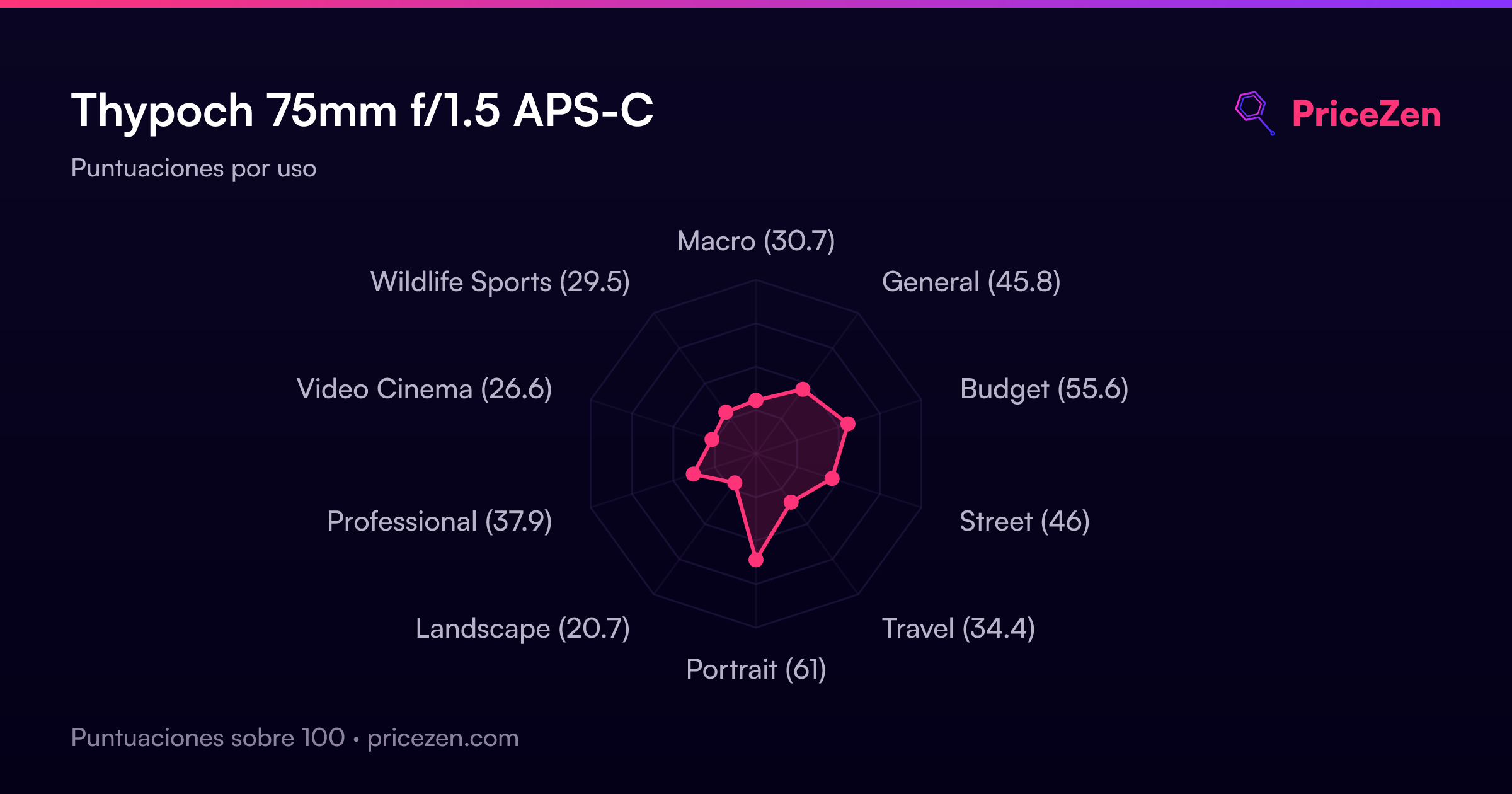
But here's where things get bumpy. Video performance scores in the bottom third despite the cine branding, and build quality is about average. Those are disappointing numbers for a lens marketed squarely at filmmakers. The lack of stabilization means you'll want a gimbal or tripod for anything beyond static shots. And landscape work? A brutal 20.7 out of 100 in our scoring. This lens has a very specific job, and wide scenic shots aren't it.
Specifications
Full Specifications
Optics
| Focal Length Min | 75 |
| Focal Length Max | 75 |
Aperture
| Max Aperture | f/1.5 |
Build
| Format | APS-C |
vs Competition
The top competitors in our system include the Sony FE 70-200mm f/2.8 GM OSS II, Sigma 70-200mm f/2.8 DG DN OS Sports, and Tamron 70-180mm f/2.8 Di III VC VXD G2. Those are all stabilized zooms with autofocus, which is a fundamentally different tool. If you need flexibility across focal lengths and reliable AF for events or run-and-gun video, any of those three will outperform the Simera-C in practical shooting scenarios. The Thypoch wins on raw aperture speed and bokeh quality, but loses on nearly every other metric our model tracks.
Against the Canon RF 35mm f/1.4L VCM and Viltrox AF 35mm f/1.2 LAB FE, the comparison is trickier because they're wider primes. But both offer autofocus and stronger overall scores in our rankings. If you're cross-shopping fast primes for hybrid photo/video work, those two deserve a hard look before you commit to a manual-only 75mm.
| Spec | Thypoch 75mm f/1.5 | Sony FE 70-200mm f/2.8 GM OSS II | Canon RF 24-105mm f/2.8L IS USM Z | Sigma 70-200mm f/2.8 DG DN OS Sports | Tamron 70-180mm f/2.8 Di III VC VXD G2 | Viltrox AF 35mm f/1.2 LAB FE |
|---|---|---|---|---|---|---|
| Focal Length | 75mm | 70-200mm | 24-105mm | 70-200mm | 70-180mm | 35mm |
| Max Aperture | f/1.5 | f/2.8 | f/2.8 | f/2.8 | f/2.8 | f/1.2 |
| Mount | - | Sony E | Canon RF | Sony E | Sony E | Sony E |
| Format Coverage | APS-C | full-frame | full-frame | full-frame | full-frame | full-frame |
| Stabilization | No | Yes | Yes | Yes | Yes | No |
| Weather Sealed | No | Yes | Yes | Yes | Yes | Yes |
| Weight (g) | - | 1045 | 1315 | 1345 | 855 | 910 |
| AF Type | - | XD Linear Motors | Nano USM | HLA (High-response Linear Actuator) | VXD | VCM |
| Lens Type | - | zoom | zoom | zoom | zoom | prime |
| Compare | Compare | Compare | Compare | Compare |
| Producto | Bokeh | Build | Reach | Video | Aperture | Wide Angle | Versatility | Affordability | Stabilization |
|---|---|---|---|---|---|---|---|---|---|
| Thypoch 75mm f/1.5 | 84.8 | 30.3 | 75.5 | 27.4 | 82.8 | 11.1 | 32.5 | 39.9 | 41.4 |
| Sony FE 70-200mm f/2.8 GM OSS II Compare | 88.7 | 99.9 | 83.5 | 85.6 | 43.4 | 28.9 | 78.5 | 12.6 | 97.3 |
| Canon RF 24-105mm f/2.8L IS USM Z Compare | 78.2 | 98.9 | 73.7 | 85.6 | 43.4 | 74 | 91.5 | 10.3 | 95.9 |
| Sigma 70-200mm f/2.8 DG DN OS Sports Compare | 88.7 | 98.9 | 83.5 | 85.6 | 43.4 | 28.9 | 78.5 | 23.7 | 99.9 |
| Tamron 70-180mm f/2.8 Di III VC VXD G2 Compare | 86 | 90.6 | 81.5 | 81.8 | 43.4 | 28.9 | 76.5 | 29.3 | 97.3 |
| Viltrox AF 35mm f/1.2 LAB FE Compare | 67.9 | 90.6 | 28.8 | 70 | 96.4 | 52.9 | 32.5 | 33.6 | 41.4 |
Precio
Value & Pricing
At EUR 766, the Simera-C 75mm isn't cheap for a manual prime, and our affordability score puts it at about average for its category. You're paying for that T1.5 aperture and the cine-specific features like geared rings and long focus throw. If you don't need those cinema touches and just want a fast portrait lens with autofocus, something like the Viltrox AF 35mm f/1.2 LAB FE or Canon RF 35mm f/1.4L VCM might serve you better at a different focal length. We track this lens's price through our community browser extension, and right now Amazon ES and IT carry it at EUR 766.
Leer más
Overview
The Thypoch Simera-C 75mm is a manual-focus cine prime with an ultra-fast T1.5 aperture, and it sits in the mid-range price bracket at EUR 766 or GBP 670 depending on where you shop. It's aimed at filmmakers and portrait shooters who want that dreamy shallow depth-of-field look without lugging around a zoom the size of a thermos. The lens uses 16 rounded aperture blades for smooth bokeh, has a 210-degree focus throw for precise manual pulls, and weighs under 450g. Metal construction throughout, no stabilization, no weather sealing.
This is an E-mount lens that covers full-frame sensors and supports up to 8K resolution. You can also adapt it to X, RF, L, and Z mount cameras via a Thypoch M mount adapter. The unified gear placement on focus and iris rings means you won't need to reposition your follow focus every time you swap lenses in the Simera-C lineup. If you're searching for a compact 75mm cine lens for portraits or low-light filmmaking, this one checks a lot of boxes on paper.
Common Questions
Q: Is the Thypoch Simera-C 75mm good for video?
It has cine features like a 210-degree focus throw and unified gears, but our scoring model ranks its video performance in the bottom third. Without stabilization, you'll need external support for smooth footage.
Q: Does the Thypoch Simera-C 75mm have autofocus?
No. This is a fully manual-focus lens designed for deliberate, controlled focusing. If you need AF, look at alternatives like the Viltrox AF 35mm f/1.2 LAB FE.
Q: What cameras does the Thypoch Simera-C 75mm work with?
It's natively E-mount and covers full-frame Sony cameras like the A7IV, FX3, and A7RV. You can adapt it to X, RF, L, and Z mount systems via a Thypoch M mount adapter.
Q: How much does the Thypoch Simera-C 75mm cost?
We currently track it at EUR 766 on Amazon in Spain and Italy, and GBP 670 in the UK.
Who Should Skip This
Skip this lens if you need autofocus for events, weddings, or any fast-moving subject. Skip it if you shoot landscapes or wide architectural work, since our model scores it at just 20.7 out of 100 there. And skip it if you want a single lens that handles both photo and video reliably without a gimbal. The Sony FE 70-200mm f/2.8 GM OSS II or Tamron 70-180mm f/2.8 Di III VC VXD G2 will give you stabilization, zoom range, and autofocus in one package. Manual cine primes are a commitment, not a convenience.
Verdict
Should you buy the Thypoch Simera-C 75mm? Only if you know exactly what you're getting into. This is a niche lens for manual-focus enthusiasts who prioritize bokeh and low-light capability above all else. The T1.5 aperture and 16-blade iris deliver standout results for portraits, and the compact metal body travels well. But the weak video and build scores are hard to ignore for a cine-branded product at this price.
If you shoot narrative film on a gimbal with a dedicated focus puller and you want that specific 75mm compressed portrait look wide open, go for it. Everyone else should probably keep scrolling.
Usage Scores
- Macro30.7
- General45.8
- Budget55.3
- Street46.1
- Travel34.4
- Portrait61
- Landscape20.7
- Professional38
- Video Cinema26.6
- Wildlife Sports29.5