Frenitt DC13
The 56MP 1/4-inch CMOS sensor captures 4K at 30fps with a 30fps mechanical burst, though it lacks stabilization. Its 180° flip screen, 16X digital zoom, and built-in fill light make it a practical choice for selfies and low-light shots, while the 360° dial simplifies mode switching. Best for beginners and teen creators who want an easy-to-use vlogging or photography camera for YouTube and casual content.

Sin precio actual de tiendas











Resumen
The 30-Second Version
The Frenitt DC13 is a budget camera with a 56MP sensor and 4K video that sounds better than it actually is. The tiny 1/4-inch sensor limits real-world image quality, and the lack of stabilization makes handheld video shaky. It's fine as a first camera for a kid or a cheap webcam, but at the current €117-119 listing, our ranking puts several stronger cameras within reach.
Pros & Cons
Ventajas
- 30fps burst shooting is genuinely fast, 86th percentile in our database 84th
- 4K video at 30fps with Log profile at a budget price 83rd
- 180-degree flip screen makes selfies and vlogging easy to frame 72nd
- Webcam mode via USB is a practical bonus for streaming and meetings 67th
- Lightweight at 600g and simple enough for absolute beginners
Desventajas
- 1/4-inch sensor is tiny, low-light performance will be rough
- No stabilization at all, handheld video will be shaky
- Autofocus system is unspecified, which is never a good sign
- Connectivity is in the 17th percentile, very limited options
- Build quality is dead average at 49th percentile, feels cheap
Las pruebas
Performance
Let's talk about that 56MP sensor, because it's the headline feature and also the biggest red flag. A 1/4-inch CMOS sensor is absolutely tiny. For context, most flagship phones use sensors that are 3-4 times larger. Cramming 56 million pixels onto a sensor that small means each pixel is minuscule, which means it captures very little light. The result is photos that look fine in bright daylight but fall apart fast indoors or at dusk. Our database puts the sensor at the 72nd percentile for this category, which sounds okay until you remember that this category is mostly budget point-and-shoots. It's a strong number among weak competition.
The burst shooting is actually the most impressive spec here. 30fps mechanical is genuinely fast, landing in the 86th percentile. That's better than a lot of cameras that cost five times as much. But here's the catch: with autofocus listed as unknown and no stabilization, those 30 frames per second are going to be a mixed bag. You'll get a lot of shots, but keeping them sharp on a moving subject is going to be a challenge. The video side tells a similar story. 4K at 30fps sounds great, and it's in the 67th percentile, but without stabilization, handheld footage is going to be shaky. The Log profile is a nice touch for a budget camera, but on a sensor this small, you're not going to pull much dynamic range out of those shadows anyway.
Specifications
Full Specifications
Sensor
| Type | CMOS |
| Size | 1/4-inch" |
| Megapixels | 56 MP |
| ISO Range | 100 |
Shooting
| Burst (Mechanical) | 30 |
Video
| Max Resolution | 4K |
| 4K FPS | 30 |
| Log Profile | Yes |
Display & EVF
| Screen Size | 3" |
| Articulating | Yes |
Build
| Weight | 0.6 kg / 1.3 lbs |
Connectivity
| USB | USB-a |
vs Competition
The Frenitt DC13 sits in an awkward spot in our rankings, because the cameras it lands next to are mostly not the same kind of product. The Sony Alpha NEX-6 and the Olympus PEN E-PL7 are both mirrorless bodies with interchangeable lenses, and they're the ones that make the DC13's headline spec look hollow. A 56MP number on a 1/4-inch sensor is not the same thing as fewer megapixels on a much bigger sensor, and in anything other than bright daylight the difference shows up immediately. The DC13 does have things those two don't offer in the same package: a 180-degree flip screen, a 30fps burst that lands in the 86th percentile, and USB webcam mode. Whether that trade is worth making depends entirely on what you're shooting.
The Canon PowerShot V10 is the more direct threat, because it's aimed at exactly the person the DC13's marketing targets: someone who wants to point a small camera at themselves and record. The DC13 has no stabilization at all, which is a serious handicap for that job, and its autofocus is unspecified. Connectivity is another weak spot at the 17th percentile, so getting footage off the camera and onto a phone isn't the quick affair you might expect.
The FlyFrost DC226 and Tecglem DC226 are the closest matches on paper, sitting in the same budget-brand space as the Frenitt. With those, you're largely comparing spec sheets and owner reports rather than established camera engineering, and our scoring model treats them accordingly. The DC13's genuine advantages there are the flip screen and that fast burst rate. Its disadvantages are the same ones that dog the whole group: a tiny sensor, no stabilization, and build quality that sits dead average at the 49th percentile.
| Spec | Frenitt DC13 | Sony Alpha a7R VI | Fujifilm X-H2 | Nikon Z8 | Panasonic Lumix G9 II | OM System OM-1 Mark II |
|---|---|---|---|---|---|---|
| Type | compact | mirrorless | mirrorless | mirrorless | mirrorless | mirrorless |
| Sensor | 56MP 1/4-inch | 66.8MP full-frame | 40.2MP aps-c | 45.7MP full-frame | 25.2MP micro-four-thirds | 20.4MP micro-four-thirds |
| AF Points | - | 759 | 425 | 493 | 779 | 1053 |
| Burst FPS | 30 | 30 | 15 | 30 | 75 | 120 |
| Video | 4K @30fps | 8K @120fps | 8K @60fps | 8K @120fps | 4K @120fps | 4K @60fps |
| IBIS | false | true | true | true | true | true |
| Weather Sealed | false | true | true | true | true | true |
| Weight (g) | 600 | 622 | 579 | 820 | 575 | 511 |
| Compare | Compare | Compare | Compare | Compare |
| Producto | AF | EVF | Build | Burst | Video | Sensor | Battery | Display | Connectivity | Valoración social | Affordability | Stabilization |
|---|---|---|---|---|---|---|---|---|---|---|---|---|
| Frenitt DC13 | 36.9 | 37.4 | 51.4 | 83 | 64.9 | 72.2 | 46 | 67.4 | 13.7 | 66.6 | 84.3 | 32.8 |
| Sony Alpha a7R VI Compare | 96.5 | 98.9 | 94.2 | 88 | 98.9 | 80.4 | 96.4 | 97.3 | 95.3 | 97.4 | 13.2 | 99.5 |
| Fujifilm X-H2 Compare | 91.3 | 96.3 | 93.1 | 79 | 94.8 | 98.8 | 97.2 | 94.9 | 95.3 | 92.4 | 27.7 | 95.6 |
| Nikon Z8 Compare | 92.7 | 90.5 | 97.3 | 94.7 | 98.4 | 66.8 | 88.6 | 97.1 | 95.3 | 97.4 | 16.4 | 87.6 |
| Panasonic Lumix G9 II Compare | 97.6 | 90.3 | 93 | 95.9 | 97.3 | 58.7 | 90 | 96.4 | 95.3 | 86.4 | 37.3 | 87.6 |
| OM System OM-1 Mark II Compare | 98.6 | 99.8 | 92.5 | 99.5 | 83.5 | 45.7 | 95.2 | 94.9 | 95.3 | 86.4 | 26.5 | 99.5 |
Precio
Value & Pricing
At €117-119, the Frenitt DC13 is priced like a proper little camera rather than an impulse buy, and that changes how you should think about it. You're getting a body that can shoot 4K video, take 56MP stills in good light, and double as a webcam over USB. Those are real features, and the included 32GB card and lens hood sweeten the pot a little, though you'll want a faster card if you plan to lean on that 30fps burst mode. The problem is that none of those features fix the fundamental limit here, which is a 1/4-inch sensor sitting at the 72nd percentile in a category made up mostly of budget point-and-shoots.
Our ranking puts the DC13 alongside cameras like the Sony Alpha NEX-6 and the Olympus PEN E-PL7, and that's the comparison that hurts. Those are older mirrorless bodies with much larger sensors, and image quality is the one thing you can't spec-sheet your way around. The Canon PowerShot V10 is also in the mix, and it's built specifically for the handheld video job the DC13 claims to do. Against that field, €117-119 buys you a lot of megapixels and not much else. Our overall score of 46.3 out of 100 reflects this: the feature list looks generous, but the value proposition thins out fast once you're paying this much for it. If you can find it cheaper, the calculus improves considerably. At the current listing price, we'd want you to look hard at the alternatives first.
Historial de precios
Leer más
Overview
The Frenitt DC13 is one of those cameras that sounds almost too good on paper. A 56MP sensor, 4K video, 30fps burst shooting, and a flip screen, all wrapped up in a compact body aimed at people who want something cheap and simple. It's pitched squarely at beginners, teens, and anyone who's tired of their phone's camera but doesn't want to drop serious money on a "real" camera. And honestly, for that crowd, it makes a decent first impression.
But here's the thing. We've been doing this long enough to know that spec sheets from budget camera brands often tell a story that the hardware can't quite back up. That 56MP number comes from a 1/4-inch sensor, which is tiny. Like, smaller than what you'd find in most modern smartphones. The 30fps burst is real, but the autofocus system is listed as "unknown," which is never a great sign. So we dug into the specs, our rankings, and what owners report to figure out if this thing is a hidden gem or just another plastic box with big promises.
What we found is a camera that's genuinely fine for what it is, as long as you know exactly what you're getting into. It's not going to replace your phone for everyday shots, and it's definitely not a serious vlogging tool despite what the marketing says. But as a first camera for a kid who wants to learn the basics, or a cheap webcam upgrade for calls, it has a place. The question is whether that place is worth the asking price.
And the price is where things get tricky right now. The listing we track has it at €117-119, which is a different conversation than the impulse-buy territory this kind of camera usually lives in. At that number, you're no longer shopping for a novelty, you're shopping for a camera, and the competition gets a lot stiffer. Our overall score of 46.3 out of 100 reflects exactly that tension.
Common Questions
Q: Is the 56MP sensor actually better than my phone's camera?
Probably not. The 56MP resolution comes from a 1/4-inch sensor, which is smaller than what most modern smartphones use. More megapixels on a tiny sensor means each pixel captures less light, so you'll see more noise and less detail in anything but bright daylight. Your phone's computational photography will likely produce better results in most situations.
Q: Can I use this camera for vlogging?
You can, but it's not ideal. The 180-degree flip screen is great for framing yourself, and the 4K video is a nice spec. But there's no stabilization at all, so handheld footage will be shaky. The autofocus is also unspecified, which means it may struggle to keep you in focus while you move. For serious vlogging, look for a camera with at least digital stabilization.
Q: Does the webcam mode work well for streaming?
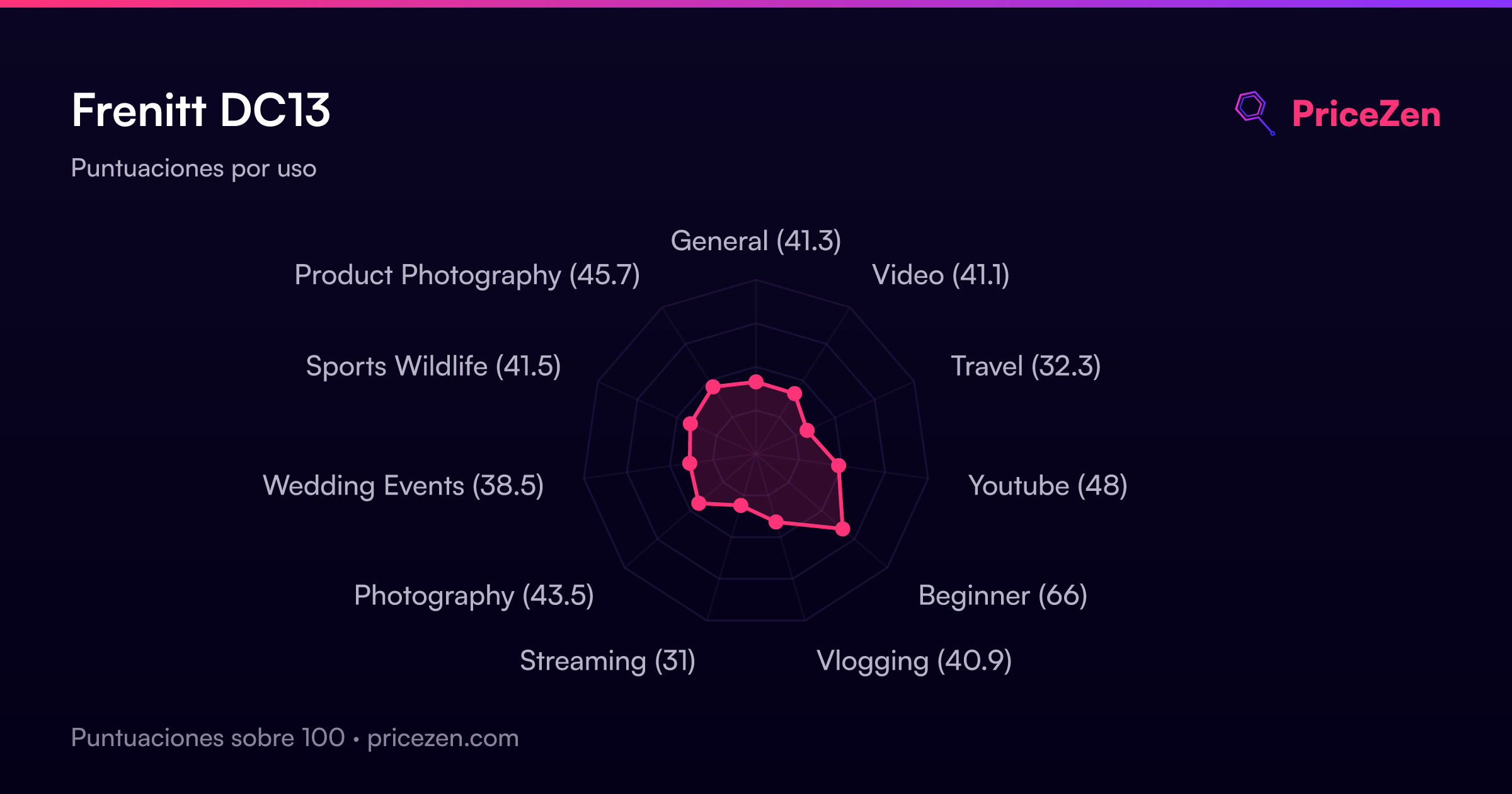
It works, but our data shows streaming is this camera's weakest area at 34.2 out of 100. The USB connection lets you use it as a webcam for meetings or basic streaming, but the lack of stabilization and the small sensor mean the image quality won't be great in typical indoor lighting. It's better than a cheap built-in laptop webcam, but not by much.
Q: What's the battery life like?
Battery life is about average for this category, landing in the 46th percentile. You should expect to get through a day of casual shooting, but if you're recording 4K video or using the burst mode heavily, you'll want to carry a spare battery. The camera charges via USB, which is convenient for topping up on the go.
Who Should Skip This
If you're planning to shoot video while moving, skip this camera. The complete lack of stabilization means your footage will be shaky and unpleasant to watch. The Canon PowerShot V10 shows up in the same comparison set and is designed for exactly that kind of handheld shooting. If you're a content creator who needs reliable autofocus, this isn't the camera for you either. The autofocus system is unspecified, which in budget camera terms usually means basic contrast detection that will hunt and struggle in low light.
Also skip this if you care primarily about image quality and you're looking at the current €117-119 price. Our ranking places the Sony Alpha NEX-6 and Olympus PEN E-PL7 alongside it, and both use much larger sensors that will produce cleaner files in any light that isn't bright sun. The Frenitt DC13 makes sense as a cheap first camera or a novelty gift when the price is right, but at this asking price it's not a serious tool for anyone who cares about image quality or video smoothness.
Verdict
If you're buying this for a teenager who wants to learn photography basics, or as a webcam that can also take photos, the Frenitt DC13 has some appeal. The flip screen makes framing yourself easy, the 4K video is a nice bonus, and the simple controls mean a beginner won't get lost in menus. Just don't expect it to replace a phone for everyday shots, because in most situations a modern phone will take better photos. The tiny sensor is the limiting factor, and no amount of megapixels can fix that.
For anyone serious about vlogging or content creation, skip this. The lack of stabilization is a dealbreaker for handheld video, and an unspecified autofocus system is not something to trust for anything important. Our ranking puts the Canon PowerShot V10 in the same shortlist, and it's built for that job in a way this isn't.
The bigger issue right now is the €117-119 listing price. At that number, the Sony Alpha NEX-6 and Olympus PEN E-PL7 are sitting right there in our comparison set, and both will run circles around this sensor for image quality. The DC13 is a fine first camera for a kid at the right price. At the current one, we'd look elsewhere.
Usage Scores
- General41.3
- Video41.1
- Travel32.3
- Youtube48
- Beginner66
- Vlogging40.9
- Streaming31
- Photography43.5
- Wedding Events38.5
- Sports Wildlife41.5
- Product Photography45.7