Best PNY GPUs Under $800 in 2026




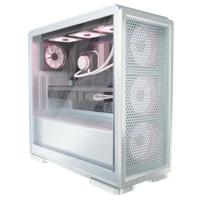

PNY GeForce RTX 5060 Ti DUAL FAN OC 16GB GDDR7

Great Alternatives
These options also score highly and may better suit your specific needs
PNY GeForce RTX 5060 ARGB OC 8GB GDDR7
Why we recommend this ▼
The Blackwell-based RTX 5060 chip delivers 19.18 TFLOPS of FP32 compute and 448 GB/s memory bandwidth, paired with a factory overclocked 2580 MHz boost clock and efficient 145W TDP. Its triple-fan ARGB EPIC-X RGB cooler and compact 280mm, 2-slot design add visual flair and broad case compatibility without excessive power demands. This card is best for 1080p gamers seeking high frame rates with ray tracing and DLSS 3 on a strict power budget.


PNY GeForce RTX 3070 XLR8 8GB GDDR6
Why we recommend this ▼
The Ampere-based RTX 3070 with 5888 CUDA cores and a 1725MHz boost clock delivers strong 1440p gaming performance, backed by 8GB of GDDR6 memory and 448 GB/s of bandwidth. Its triple-fan cooler and 140W TDP provide efficient thermal management in a standard 2-slot, 294mm design that fits most mid-tower cases. This card is best for 1440p gamers seeking high frame rates in modern titles with ray tracing and DLSS enabled.

PNY GeForce RTX 5060 Ti 8GB GDDR7
Why we recommend this ▼
The Blackwell architecture and 8GB of GDDR7 memory on a 128-bit bus deliver a 2692MHz boost clock, while DLSS 4 with fifth-gen Tensor Cores drives high frame rates at 1080p. Its 85W TDP and compact 2-slot, SFF-Ready design make it an efficient, easy drop-in upgrade for smaller builds without sacrificing modern connectivity like PCIe 5.0 and DisplayPort 2.1. This card is best for 1080p gamers seeking low-latency competitive play through Reflex and AI-enhanced visuals on a strict power budget.

PNY GeForce RTX 4060 VERTO 8GB GDDR6
Why we recommend this ▼
The Ada Lovelace architecture and DLSS 3 frame generation provide a clear performance advantage for 1080p gaming, while the compact 210mm dual-fan design fits easily into small form factor builds. Its low 115W power draw and simple 8-pin connector allow for a straightforward upgrade without a massive power supply. This card is best for budget-conscious 1080p gamers who want modern features like ray tracing and AV1 encoding in a space-constrained system.


PNY RTX A2000 12GB GDDR6 workstation
Why we recommend this ▼
A 70W TDP and low-profile, dual-slot design allows this 12GB Ampere workstation card to fit into compact systems without external power connectors. Its 12GB of GDDR6 memory with ECC support provides data integrity for mission-critical applications, a feature typically absent in this segment. This GPU is best for CAD designers and 3D modelers needing certified drivers and reliable performance in small form factor workstations.

PNY GeForce RTX 3060 Ti 8GB GDDR6
Why we recommend this ▼
The Ampere-based RTX 3060 Ti delivers strong 1080p gaming with 4864 CUDA cores and 8GB of GDDR6 memory on a 256-bit bus. Its dual-fan cooler maintains a compact 251mm length, fitting easily into smaller builds while supporting modern connectivity via HDMI 2.1 and PCI Express 4.0. This card is best for 1080p gamers who want solid ray tracing performance and DLSS support without upgrading their power supply beyond a 550W unit.

PNY RTX A1000 8GB GDDR6 workstation
Why we recommend this ▼
The single-slot, 50W TDP design with 2307 CUDA cores and 8GB of GDDR6 memory delivers certified workstation reliability in a compact 163mm form factor. Its four Mini DisplayPort 1.4a outputs natively drive quad 5K or dual 8K displays, making it a standout for multi-monitor command centers. This card is best for CAD designers and financial analysts needing robust visual real estate without upgrading their 650W power supply.

PNY Tesla T4 16GB GDDR6 datacenter
Why we recommend this ▼
The 16GB GDDR6 memory and 320 GB/s bandwidth deliver 65 TFLOPS of FP16 performance, making this a specialized accelerator for AI inference workloads. Its single-slot, fanless design allows dense, energy-efficient deployment in existing servers without thermal disruption. This card is best for data center operators running real-time deep learning inference at scale.
