FoMaKo K630N Black
The 30x optical zoom and 4K 60fps output over NDI HX3, HDMI, USB 3.0, and 3G-SDI make this PTZ camera a flexible choice for multi-camera productions. Its gear-driven pan-tilt head delivers precise preset positioning and is more durable than belt designs, while the third-generation AI tracking lets you adjust sensitivity, target size, and lost-target actions. Best for church live services, education, and conference setups that need reliable auto-tracking and simultaneous 4K streaming without a dedicated operator.

No current retailer price
Where we saw it before. Check the store for today's price.










Snapshot
The 30-Second Version
A brilliant cable-management decision and a mediocre camera. Buy it for the four outputs and PoE, not the picture.
Pros & Cons
Pros
- Four simultaneous outputs: NDI/LAN, HDMI 2.0, USB 3.0 and 3G-SDI 74th
- 4K60 over NDI HX3, HDMI, USB and IP streaming, plus RTSP, RTMP and SRT 69th
- PoE means one cable for power and video, which installers will love
- Gear-driven PTZ with adjustable pan, tilt, zoom and preset speeds
Cons
- 8.4MP sensor ranks in the 6th percentile, one of the weakest here
- 3G-SDI caps out at 1080p60 while everything else does 4K
- Zero stabilization and no weather sealing, so it lives indoors on a mount
- 1270g of camera that's useless as a walkaround or vlogging tool
The proof
Performance
The spec sheet is genuinely busy in a good way. 4K at 60fps across NDI HX3, HDMI, USB 3.0 and LAN, with RTSP, RTMP and SRT streaming also topping out at 4K60. The catch nobody reads until setup day: 3G-SDI only does 1080p60, so if your switcher lives on SDI, you're a 1080p shop. The 8.4MP sensor ranks in the 6th percentile, dead last territory, so don't expect clean shadows or shallow depth. There's no stabilization at all and the display ranks near the bottom too. What did surprise us is the gear-driven PTZ mechanism instead of belts, which FoMaKo claims extends service life by up to 50% and keeps presets landing in the same spot year after year. For a camera nobody touches during a service, that matters more than bokeh.
Specifications
Full Specifications
Sensor
| Megapixels | 8.42 MP |
Autofocus
| Subject Detection | Yes |
Shooting
| Electronic Shutter | Yes |
Video
| Max Resolution | 4K |
| 4K FPS | 60 |
| 1080p FPS | 60 |
| Codec | NDI HX3, H.264, H.265 |
Build
| Weight | 1.3 kg / 2.8 lbs |
Connectivity
| Wi-Fi | Yes |
| USB | USB-B |
| HDMI | HDMI 2.0 |
| Hot Shoe | No |
vs Competition
The cross-shop list is a comedy of mismatched categories: Sony FX30, Fujifilm X-H2, Panasonic Lumix G9 II, Nikon Z6 III and OM System OM-1 Mark II are all cameras you hold, and none of them will sit on a wall and track a speaker while you run a switcher from the back row. If you want to shoot video with your hands, the FX30 is the one to go look at, and the X-H2 or Z6 III if you want stills and video from one body. But if the job is unattended coverage of a room, the K630N's four simultaneous outputs, NDI HX3 support and PoE are the reason to buy it, and its video ranking is strong against the field it's actually competing in. Just don't buy it hoping it doubles as a travel camera.
| Spec | FoMaKo K630N | Sony Alpha a7R VI | Fujifilm GFX100S II | Canon EOS R1 | Panasonic Lumix S1H | Leica Q3 |
|---|---|---|---|---|---|---|
| Type | cinema | mirrorless | mirrorless | mirrorless | mirrorless | compact |
| Sensor | - | 66.8MP full-frame | 102MP medium-format | 24.2MP full-frame | 24.2MP full-frame | 60.3MP full-frame |
| AF Points | - | 759 | 117 | 4897 | 225 | 315 |
| Burst FPS | - | 30 | 7 | 40 | 9 | 15 |
| Video | 4K @60fps | 8K @120fps | 4K @30fps | 6K @120fps | 6K @60fps | 8K @60fps |
| IBIS | No | Yes | Yes | Yes | Yes | Yes |
| Weather Sealed | No | Yes | Yes | Yes | Yes | Yes |
| Weight (g) | 1270 | 622 | 883 | 920 | 1164 | 658 |
| Compare | Compare | Compare | Compare | Compare |
| Product | AF | EVF | Build | Burst | Video | Sensor | Battery | Display | Connectivity | Affordability | Stabilization |
|---|---|---|---|---|---|---|---|---|---|---|---|
| FoMaKo K630N | 68.8 | 37.5 | 63.3 | 32 | 74 | 6.2 | 45.9 | 27.5 | 57.3 | 58.6 | 33 |
| Sony Alpha a7R VI Compare | 96.5 | 98.9 | 94.2 | 88 | 98.9 | 80.9 | 96.4 | 97.3 | 95.5 | 12.5 | 99.6 |
| Fujifilm GFX100S II Compare | 83.3 | 96.6 | 87.4 | 65.7 | 75.3 | 97.5 | 95.5 | 99.2 | 95.5 | 9.5 | 98.4 |
| Canon EOS R1 Compare | 99.8 | 99.2 | 98.2 | 90.8 | 95.8 | 52.9 | 45.9 | 98 | 95.5 | 9.1 | 87.8 |
| Panasonic Lumix S1H Compare | 86.6 | 97.7 | 99.3 | 78.4 | 83.5 | 52.9 | 91.3 | 82.3 | 95.5 | 29.8 | 87.8 |
| Leica Q3 Compare | 88.9 | 96.1 | 95 | 74.1 | 93.4 | 74.8 | 88.9 | 96.4 | 80.8 | 6.9 | 74.9 |
Price
Value & Pricing
For a fixed-install streaming camera, USD 729 is fair. You're paying for 30x optical zoom, four live outputs and PoE, and our affordability ranking puts it slightly above the middle of the pack. Amazon and Best Buy both list it at USD 729, so there's no clever store arbitrage to chase here. As a general-purpose camera it's poor value, and the 34.9 overall score says so plainly.
We started tracking prices for this product on Nov 25, 2026. The chart appears once we have more data.
Read more
Overview
Let's clear something up first: the FoMaKo K630N isn't a bridge camera, no matter which shelf it's sitting on. It's a motorized pan-tilt-zoom broadcast box built for churches, lecture halls and conference rooms, and judging it like a handheld camera is how you end up disappointed. At USD 729 (CAD 959 up north), the thing to know is that this is an output-and-plumbing machine: four simultaneous feeds over NDI/LAN, HDMI 2.0, USB 3.0 and 3G-SDI, plus PoE so one cable does power and video.
Our scoring model puts its overall number at 34.9 out of 100, which sounds brutal until you see where the points go. Video lands at 38/100 but sits well above average against everything else in its category, while the sensor score is one of the worst we've seen. That's the whole story in two numbers: lots of ways to move a picture, not much picture to move.
Common Questions
Q: Can I use it as a plain USB webcam?
Yes. USB 3.0 carries 4K60, so it shows up as a very expensive webcam for Zoom. Overkill, but it works.
Q: Do I need a capture card or a separate power supply?
Not necessarily. PoE handles power and video over one Ethernet run, and HDMI 2.0 or USB 3.0 give you direct paths if your setup prefers those.
Q: Will it shoot decent handheld video?
No. There's no stabilization, no weather sealing, and it weighs 1270g with a motorized head. Mount it and leave it alone.
Who Should Skip This
If you want a camera to carry, vlog with, or shoot in dim rooms, this isn't it. The vlogging score of 21.4 and that bottom-tier sensor ranking aren't fixable with settings. Go look at the Sony FX30 for video work or the Nikon Z6 III if you want stills too.
Verdict
Buy it if you're wiring a sanctuary, classroom or conference room and need one camera that feeds a switcher, a stream and a local recorder at once. The Gen 3 AI tracking gives you real controls (sensitivity, figure size, click-to-switch target, horizontal-only mode, lost-target behavior) rather than a single toggle and a prayer, and F2 on the remote starts tracking without a laptop. Skip it if you need SDI at 4K, low-light image quality, or anything you carry. Our beginner score of 54.1 is middling for a reason: the hardware is straightforward, the setup is not.
Usage Scores
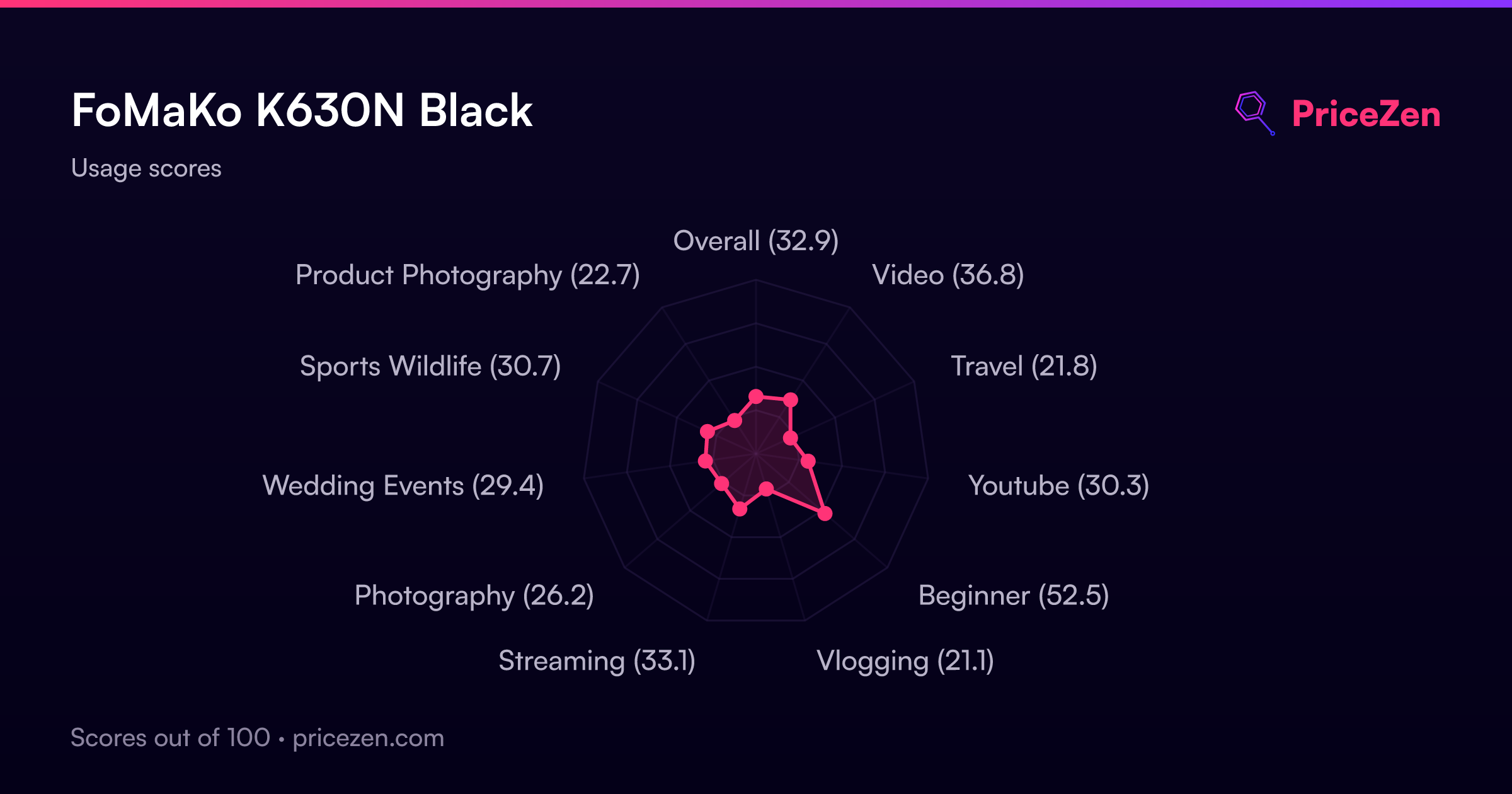
- Overall32.9
- Video36.8
- Travel21.8
- Youtube30.3
- Beginner52.5
- Vlogging21.1
- Streaming33.1
- Photography26.2
- Wedding Events29.4
- Sports Wildlife30.7
- Product Photography22.7