Best MSI Content Creation GPUs Premium in 2026




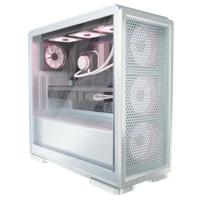

MSI GeForce RTX 5080 SHADOW 16GB GDDR7

Great Alternatives
These options also score highly and may better suit your specific needs
MSI GeForce RTX 5070 TI 16G GAMING TRIO OC
Why we recommend this ▼
The Blackwell-based RTX 5070 Ti pairs 8960 CUDA cores with 16GB of GDDR7 memory at 896 GB/s, delivering 43.94 FP32 TFLOPS and a 32462 PassMark score. Its TRI FROZR 4 cooling with STORMFORCE fans and nickel-plated copper baseplate keeps noise low while sustaining high clocks. Best for 4K gamers who want ray tracing performance at 95.8/100 and DLSS 4 support without needing AI LLM workloads.

MSI
Why we recommend this ▼
Equipped with 16GB of GDDR7 memory on a 256-bit bus and a 2482 MHz boost clock, this card delivers 43.9 FP32 TFLOPS for demanding content creation and ray tracing workloads. The triple-fan VENTUS 3X design incorporates a unique cable-free, hidden-connector aesthetic that simplifies PC building and cable management. It is best for 3D artists and video editors who need high VRAM capacity and PCIe 5.0 bandwidth for 4K projects, but may find its 16GB limit constraining for large AI model inference.

MSI GeForce RTX 5070 Ti INSPIRE 16GB GDDR7
Why we recommend this ▼
The Blackwell architecture and 16GB of GDDR7 memory on a 256-bit bus deliver strong 1440p gaming and ray tracing performance, backed by a 2482MHz boost clock. Its compact 288mm, 2-slot design with a triple-fan cooler makes it a practical fit for smaller builds without sacrificing the PCIe 5.0 interface. This card is best for gamers and content creators upgrading to a high-refresh 1440p setup who need AV1 encoding and DLSS 4 support.

MSI GeForce RTX 5070 Ti MLG Edition 16GB GDDR7
Why we recommend this ▼
The Blackwell-based RTX 5070 Ti with 16GB of GDDR7 memory and a 2580 MHz boost clock delivers strong 4K gaming and ray tracing at 92.2/100. MSI’s Air Antegrade Fin 2.0 cooler and factory overclock ensure sustained performance under load while maintaining quiet operation. This card is best for 1440p and 4K gamers who want high frame rates with DLSS 4 and ray tracing enabled.

MSI GeForce RTX 5090 SUPRIM Liquid 32GB GDDR7
Why we recommend this ▼
The 32GB GDDR7 VRAM on a 512-bit interface, paired with 21,760 CUDA cores and a 2580MHz boost clock, delivers top-tier 4K gaming and ray tracing performance. Its hybrid AIO liquid cooling keeps the card compact at 148mm, fitting into smaller cases while maintaining high power efficiency. This GPU is best for enthusiasts building a high-end 4K gaming rig or creators needing massive VRAM for AI workloads.

MSI GeForce RTX 3090 Ventus 3X 24GB GDDR6X
Why we recommend this ▼
The 24GB GDDR6X frame buffer and 936 GB/s bandwidth on the Ampere-based RTX 3090 chipset make this card a powerhouse for 8K workflows and large AI model inference. Its triple-fan cooler maintains a relatively compact 2.2-slot footprint, and the Amazon Renewed program offers a more accessible entry point to this tier of performance. This card is best for 3D artists and AI researchers who need massive VRAM for complex scene rendering or LLM fine-tuning without stepping up to professional Quadro pricing.

MSI 4719072965440
Why we recommend this ▼
The 9728 CUDA cores and 2610 MHz boost clock on the Ada Lovelace 5nm chip deliver 24.72 FP32 TFLOPS, making this a top-tier card for 4K ray tracing with a PassMark G3D score of 34446. Its triple-fan cooling and 337mm length fit large cases, while the 16GB GDDR6X memory and 432 GB/s bandwidth handle heavy textures without stutter. Best for gamers prioritizing 4K and 1440p ray tracing performance who have an 850W PSU and a spacious chassis.

MSI V513-642R
