Best Ray Tracing GPUs Under CA$1,500 in 2026



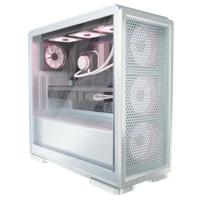

MSI G5070-12GTC

Great Alternatives
These options also score highly and may better suit your specific needs
ZOTAC GeForce RTX 5070 Solid OC 12GB GDDR7
Why we recommend this ▼
The Blackwell architecture and 12GB of GDDR7 memory on a 192-bit bus deliver strong 1440p performance, with DLSS 4 and a 2542MHz boost clock pushing frame rates in demanding titles. Its compact, SFF-Ready triple-fan design with IceStorm 2.0 cooling and a metal backplate offers robust thermal management in a durable, transport-secure package. This card is best for 1440p gamers seeking high refresh rate gameplay with ray tracing, though its 12GB buffer limits heavy 4K or AI workload use.

XFX Radeon RX 7900 GRE Gaming 16GB GDDR6
Why we recommend this ▼
The 16GB GDDR6 buffer and RDNA 3 architecture with 5120 stream processors deliver strong 1440p gaming at high frame rates, backed by a 2395MHz boost clock. Its triple-fan cooler and 2.5-slot design provide effective thermal management for the 245W TDP without excessive case footprint. This card is best for gamers prioritizing high-refresh 1440p performance and ray tracing on a budget, though its 69.8 AI score makes it a poor fit for local LLM workloads.

Gigabyte GeForce RTX 5070 AERO 12GB GDDR7
Why we recommend this ▼
The Blackwell-based RTX 5070 AERO OC delivers 30.87 FP32 TFLOPS and 12GB of GDDR7 memory on a 192-bit bus, making it a strong 1440p performer with DLSS 4 support. Its white triple-fan cooler and factory overclock to 2625 MHz provide a clean aesthetic and solid thermal headroom in a 2.9-slot design. This card is best for 1440p gamers seeking high refresh rates and ray tracing without stepping up to a higher power tier.

Gigabyte Radeon RX 9070 XT Gaming 16GB GDDR6
Why we recommend this ▼
The RDNA 4 architecture and a 3060 MHz boost clock drive strong 4K gaming performance, backed by 16GB of GDDR6 memory on a 256-bit bus. Its triple-fan cooler manages a 424W TDP while dual HDMI 2.1 and DisplayPort 2.1 outputs offer flexible, high-bandwidth connectivity for modern displays. This card is best for 4K gamers who prioritize high frame rates and ray tracing, but should be avoided for heavy AI or LLM workloads.

Gigabyte GeForce RTX 5070 AORUS 12GB GDDR7

ZOTAC GeForce RTX 5070 GAMING 12GB GDDR7

ASRock Radeon RX 9070 Challenger 16GB GDDR6
Why we recommend this ▼
The RDNA 4 architecture and 16GB of GDDR6 memory on a 256-bit bus deliver strong 4K gaming performance with a 2520MHz boost clock. A triple-fan cooler with 0dB silent mode and a metal backplate provides effective, quiet thermal management in a compact 290mm dual-slot design. This card is best for 1440p-to-4K gamers who prioritize ray tracing and want a quiet, PCIe 5.0-ready upgrade without a massive case footprint.

MSI GeForce RTX 5070 INSPIRE 12GB GDDR7
Why we recommend this ▼
The Blackwell architecture and 12GB of GDDR7 memory deliver a 2557 MHz boost clock, making this a strong 1440p performer with DLSS 4 and a compact 2-slot, 288mm triple-fan design. Its 250W TDP and PCIe 5.0 interface provide efficient, modern connectivity in a restrained aesthetic that avoids gamer-centric bulk. This card is best for 1440p gamers seeking high frame rates and ray tracing without a massive case footprint.

Yeston Radeon RX 9070 XT Atlantis 16GB GDDR6

GUNNIR Arc Pro 24GB GDDR6 workstation
Why we recommend this ▼
The 24GB GDDR6 frame buffer on a 192-bit bus distinguishes this card for memory-intensive workstation tasks, offering substantial capacity for large AI models and datasets at a 120W TDP. Its TSMC N5 manufacturing process and PCIe 5.0 x8 interface provide modern efficiency and bandwidth, complemented by a full AV1 encode engine. This card is best for AI developers and researchers running local large language models who need high VRAM capacity without the cost of flagship professional GPUs.

BOSGAME Radeon RX 7600M XT 8GB GDDR6
